
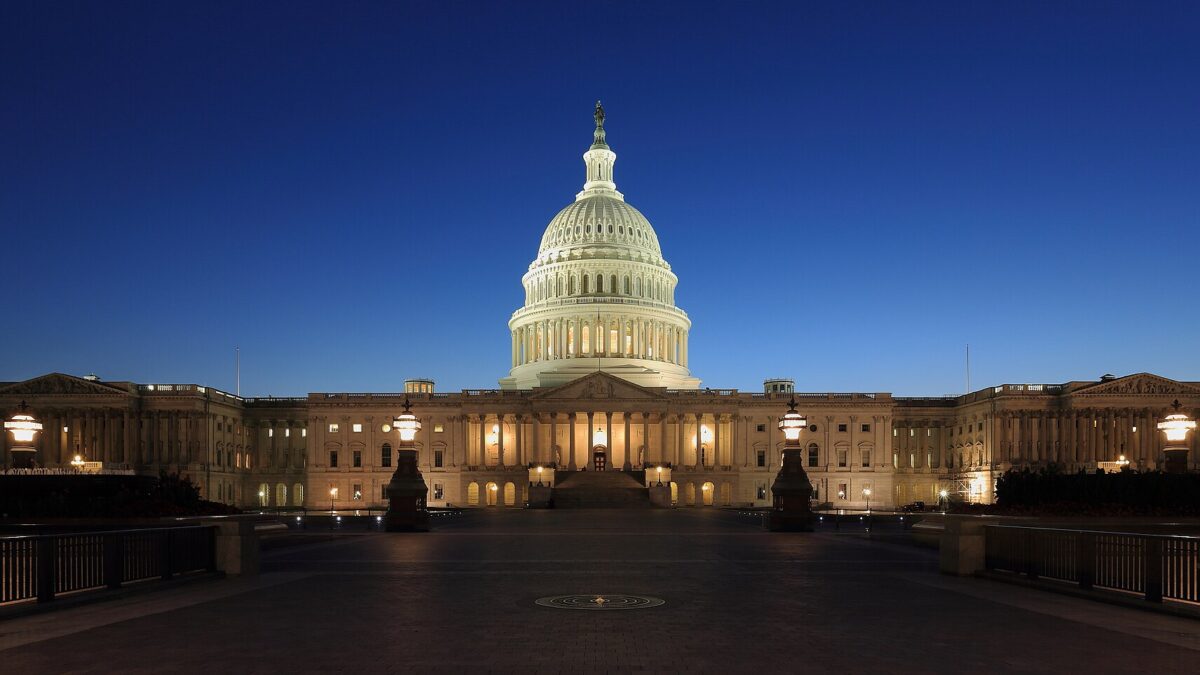
Short version: The 119th Congress retains its constitutional legislative authority after the November 3, 2026 election and until the new Congress begins at noon January 3, 2027. It can pass spending measures, ordinary legislation and other business, subject to the same House, Senate and presidential requirements that apply before Election Day.
Data as of October 23, 2026; sources listed below.
The Election Does Not End a Congressional Term
The November 3 election determines who will occupy House seats and regularly scheduled Senate seats in the next Congress, but the winners generally do not take their seats that night. The Twentieth Amendment sets the end and beginning of congressional terms at noon January 3. From Election Day until then, the sitting House and Senate retain their authority.
This interval is commonly called a lame-duck session when Congress meets after an election and before the new members are sworn in. It is not a separate constitutional institution and has no special lower voting threshold. Bills still must pass both chambers in identical form and receive presidential approval or otherwise satisfy the constitutional requirements for becoming law.
The U.S. Senate’s session history and its legislative calendar are primary references for what has been scheduled. Announced plans are not enacted laws, and the congressional leadership can alter meeting days.
| Item | May the 119th Congress act after November 3? | Timing or vote rule | Official source |
|---|---|---|---|
| Appropriations and temporary funding | Yes | Existing funding expiration, if applicable; normal passage rules | Congress.gov |
| Defense authorization | Yes | No automatic election-night cutoff | House Armed Services Committee |
| Ordinary legislation | Yes | Must pass both chambers before adjournment or otherwise be revived later | House Clerk |
| Executive and judicial nominations | Senate may consider them | Confirmation generally by Senate majority under current precedents | Senate nominations |
| Oversight hearings | Yes, within congressional powers | Subject to chamber rules and committee authority | House committees |
| New congressional terms | Not before January 3 | Noon January 3, 2027 | Constitution, Twentieth Amendment |
The table identifies types of work Congress can undertake, not bills that are guaranteed to receive a vote. An urgent deadline can be changed by a new statute; a committee can also schedule hearings without producing legislation.
Spending Bills Often Drive the Schedule
Federal appropriations are among the most consequential late-year matters. Congress may approve one or more regular appropriations bills or use a continuing resolution to provide temporary spending authority. The precise expiration of the funding measure then in force is more important than Election Day itself.
Under Public Law 119-103, the Continuing Appropriations and Extensions Act, 2027, signed September 2, 2026, temporary FY2027 appropriations run through December 11, 2026. That is a concrete late-year deadline, though Congress may enact replacement appropriations or extend funding before then. A statutory expiration date is not a prediction that a shutdown will occur.
The House initiates revenue-raising measures under the Constitution, but legislation still requires bicameral agreement. Differences between House and Senate appropriations can be resolved by amendment exchanges, negotiation or conference procedures. The number of separate bills and the packaging used near a deadline do not change the need for a valid legislative enactment.
A continuing resolution is also not the same as final approval of every government program for a full fiscal year. It usually extends funding under specified conditions for a limited time. Readers should distinguish an agency being funded from an agency receiving a new policy authorization.
Defense, Taxes and Other Policy Bills
The National Defense Authorization Act is a recurring vehicle for defense policy and authorization provisions. It is often discussed in the closing months of a congressional session. Whether the 2026 version passes in a lame-duck period depends on the legislative stage, amendments, leadership decisions and negotiations between the chambers.
Other subjects can include tax policy, expiring programs, disaster aid, agricultural programs and revisions to laws that will otherwise change on a statutory date. A bill’s title is not evidence of what is in its final text. Late-stage amendments can change the scope, and a provision included in a House version can disappear from the enrolled law.
The best way to follow an individual measure is to examine its Congress.gov legislative history, recorded House votes from the House Clerk and Senate roll calls at senate.gov. Committee summaries and press releases are useful for stated priorities but do not replace the enrolled text.
What the Senate Can Do With Nominations
The Senate’s advice-and-consent role continues after Election Day. Executive-branch and federal judicial nominees can be debated and voted on while the sitting Senate remains in office. The president may submit nominations, and senators may act according to the Senate’s procedures.
Senate confirmation is not the same as passing a bill. The House does not confirm federal judicial or executive nominees. The Senate’s modern cloture precedents generally allow debate on nominations to be closed by majority vote, unlike the ordinary legislative filibuster threshold. The nomination is then subject to a separate confirmation vote.
Pending nominations do not automatically become confirmed because a Congress is ending. Some may be returned to the president at an adjournment under Senate Rule XXXI, subject to its exceptions and Senate decisions. A new submission may be required. Thus, the status of a nomination after January 3 cannot be inferred merely from its appearance on an October executive calendar.
What Happens to Bills That Never Pass?
Ordinary legislation does not simply roll over intact from the 119th Congress to the 120th. A bill introduced in the 119th that has not become law generally dies when that Congress ends. Supporters can introduce similar text in the next Congress, but the new measure receives a new bill number and must again navigate the legislative process.
That is why the weeks before January 3 can matter to both supporters and opponents of a pending proposal. It may be the last chance for that particular measure to become law without reintroduction. It is also why a successful committee vote should never be treated as equivalent to enactment.
Congressional action after the election is still accountable to current law and procedural constraints. A presidential veto can return a measure to Congress; overriding it requires two-thirds of both chambers. A Senate filibuster may affect ordinary legislation even when a simple majority would favor final passage.
Three Misconceptions About the Lame Duck
First, newly elected House members do not automatically vote on bills before their new terms begin. The continuing members of the sitting Congress vote. Second, a change of control projected on election night does not immediately change committee leadership or the rules under which the sitting chamber is operating. Third, the Senate is a continuing body, but that fact does not mean an unpassed House or Senate bill survives the expiration of a Congress.
Those distinctions make the legislative timeline clearer than the political shorthand. A lame-duck session is a real exercise of congressional authority, not a ceremonial winding-down period.
Following the Session
For any voter, the most concrete questions are what spending levels and policy changes appear in the actual legislative text, how each senator and representative votes on them, and whether a proposed executive action needs authorization by statute. Votes cast after an election are recorded and public, just like those cast before it.
Lame-Duck Session FAQ
Can Congress pass laws after November 3, 2026? Yes. The 119th Congress remains in office until the next congressional terms begin January 3, 2027.
Do newly elected representatives vote in the lame-duck session? Ordinarily no. Members of the sitting Congress remain the voters until the new term.
Can the Senate confirm judges after Election Day? Yes, subject to Senate rules and the status of the nominations.
What happens to a bill that has not passed by January 3? It generally expires with the Congress and must be reintroduced in a new Congress.
Does a continuing resolution permanently fund agencies? Usually not; it ordinarily supplies temporary funding subject to its statutory terms.
Sources
- Constitution Annotated: Twentieth Amendment
- U.S. Senate: Dates of sessions of Congress
- U.S. Senate: 2026 legislative schedule
- Congress.gov: Federal legislation
- Government Publishing Office: Public Law 119-103, FY2027 continuing appropriations
- U.S. House Clerk: Floor votes
- U.S. Senate: Nominations