The numbers: Three states elect governors in 2027. Kentucky and Mississippi vote November 2; Louisiana votes October 9, with a November 20 runoff if no one wins a majority. Two of the three seats are open: Kentucky’s Andy Beshear (D) and Mississippi’s Tate Reeves (R) are term-limited. Louisiana’s Jeff Landry (R) is eligible for a second term. As of November 26, 2026, at least four Republicans have entered the Mississippi race and Rep. James Comer has entered in Kentucky.
Data as of November 26, 2026; candidate lists include only announced candidates with a dated source. Sources listed below.
Three States, Three Different Contests
Only three states have regularly scheduled governor elections in 2027. That makes them an unusually concentrated test of state-level organization before the 2028 presidential election. The governor’s office controls execution of state laws, administration of executive agencies and, subject to state constitutions, appointments and veto decisions. It also provides a visible platform for arguing about taxes, education, public safety and election administration.
No primary result or general-election result for 2027 exists as of November 2026. Candidates who announce or raise money are not nominees until the applicable selection process is complete. Polls conducted more than a year in advance describe a temporary electorate, not a certified outcome.
| State | Current governor and party | Scheduled election | Incumbent eligibility | Official source |
|---|---|---|---|---|
| Kentucky | Andy Beshear (D) | Primary May 18; general November 2, 2027 | Consecutive-term limit prevents another immediate term | Kentucky State Board of Elections |
| Louisiana | Jeff Landry (R) | October 9; runoff November 20 if needed | Eligible for another consecutive term | Louisiana Secretary of State |
| Mississippi | Tate Reeves (R) | General November 2, 2027 | Consecutive-term limit prevents another immediate term | Mississippi Secretary of State |
Louisiana’s later runoff date is conditional: its system can finish an election on the first date if a candidate reaches the required majority.
2027 Governor Candidates So Far
| State | Republicans announced | Democrats announced | Source |
|---|---|---|---|
| Kentucky | U.S. Rep. James Comer (announced Nov. 16, 2026) | Lt. Gov. Jacqueline Coleman (April 2026); Rocky Adkins, former senior adviser to Gov. Beshear (July 12, 2026) | WUKY |
| Louisiana | Gov. Jeff Landry has signaled a second-term bid | No major candidate announced | KLFY/WGNO |
| Mississippi | Attorney General Lynn Fitch; Agriculture Commissioner Andy Gipson; former House Speaker Philip Gunn; State Auditor Shad White (Nov. 9, 2026) | Priscilla Till (Oct. 2, 2026) | Mississippi Free Press |
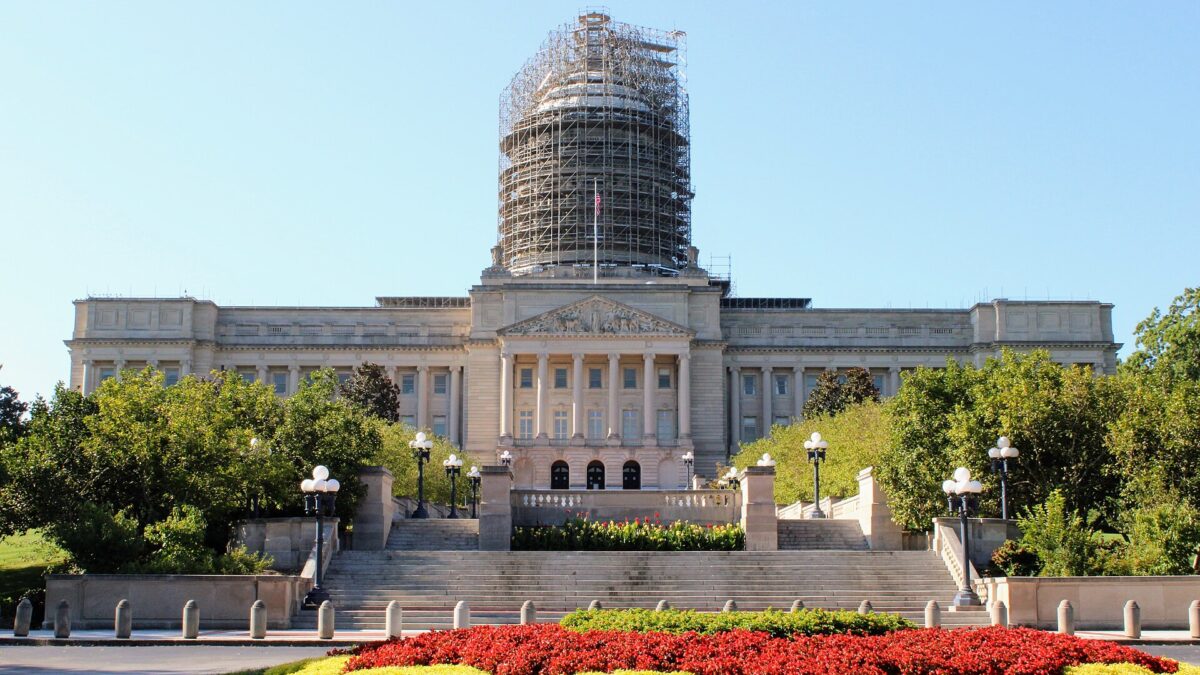
Kentucky. Comer, who represents Kentucky’s 1st Congressional District, announced his campaign during a livestreamed town hall on Nov. 16 and said his priorities include growing the economy, creating good-paying jobs and reducing taxes, WLKY reported. WLKY described him as one of four Republicans seeking the nomination. It is his second run for governor; he narrowly lost the 2015 Republican primary to Matt Bevin. On the Democratic side, Coleman, Beshear’s lieutenant governor, and Adkins are running. The primary is May 18, 2027.
Mississippi. State Auditor Shad White, whose office broke the state’s TANF welfare-fraud case, entered the race on Nov. 9 as the fourth Republican, joining Fitch, Gipson and Gunn, the Mississippi Free Press reported. Priscilla Till, a cousin of Emmett Till, announced a campaign on Oct. 2, the Mississippi Free Press reported. Party primaries are held in August 2027.
Louisiana. Landry won the 2023 race outright in the first round with more than 52% of the vote and had nearly $11 million in his campaign account, according to state campaign finance reports cited by WGNO. The candidate filing deadline falls in August 2027.
Kentucky: An Open Governor’s Seat
Kentucky’s governor is Democrat Andy Beshear, first elected in 2019 and reelected in 2023. Under the state’s constitutional consecutive-term restriction, he cannot immediately seek a third four-year term. That makes the 2027 race an open-seat contest. The state-level party nominees will be chosen through Kentucky’s primary election process, rather than a single all-candidate general ballot.
Kentucky’s official multiyear election schedule and annual calendar identify the May 18, 2027 primary and November 2 general election. Candidates must comply with separate state filing procedures and deadlines. A voter should not assume that the general-election registration cutoff is also the primary deadline.
Three distinctions matter. First, a term-limited governor does not automatically produce a competitive general election; party registration, candidate quality, funding and turnout still determine the result. Second, the governor and lieutenant governor campaign as a ticket under Kentucky law. Third, other statewide constitutional offices are also regularly on the Kentucky odd-year ballot, which can change turnout and the shape of the campaign.
The official source for a candidate’s ballot status is the state election authority, not an exploratory committee, campaign announcement or third-party spreadsheet.
Louisiana: Majority Threshold and Possible Second Election
Louisiana Governor Jeff Landry, a Republican elected in 2023, is eligible for a second consecutive term. Unlike the open seats in Kentucky and Mississippi, the incumbent may legally seek reelection. Whether he files or faces opposition is a separate question from eligibility.
Louisiana’s election system requires special attention because a fall ballot can include multiple candidates and, if no candidate receives more than half the votes, the leading two advance to a later election. The state’s scheduled 2027 gubernatorial election dates are October 9 and a possible November 20 runoff, according to the Louisiana secretary of state.
The party-label and nomination rules have also evolved in Louisiana. A presidential-year or congressional party-primary rule should not be copied automatically into the rules for a gubernatorial contest. The correct reference is the state election calendar and controlling election code for the specific office and year.
For coverage and election-night reporting, the critical number is the majority threshold: more than 50% can finish the race at the first election, while a close multicandidate field can extend the contest into November. A candidate who leads with a plurality has not necessarily been elected. That difference is more important than which party appears first in an unofficial results display.
Mississippi: An Open Seat and Statewide Majority Rules
Mississippi Governor Tate Reeves, a Republican elected in 2019 and reelected in 2023, is also barred from seeking a third consecutive term. Mississippi therefore joins Kentucky as an open-seat gubernatorial state in 2027, although the two states have different electorates and policy priorities.
The Mississippi general election is scheduled for November 2, 2027. Mississippi’s election administration and candidate information appear on the secretary of state’s election portal. The state elects several executive officials alongside the governor; their races may contribute to the turnout environment.
Mississippi voters approved a state constitutional change in 2020 that replaced the old electoral-vote-like requirement for statewide offices. A candidate for governor now must receive a majority of votes cast in the general election. If no candidate earns that majority, state law provides a runoff between the top two candidates. This is a different potential runoff from Louisiana’s scheduled November date and must be checked against Mississippi’s separate calendar.
An important reporting safeguard follows: election-night plurality totals are not a substitute for the legal majority test. A three-way race can produce a leader without producing a winner. Reporters and campaigns should also distinguish a concession speech from the state’s certified determination.
The Rules That Matter More Than Early Polls
For all three states, the first research checklist is procedural. Confirm each candidate’s qualification; note whether the election is a party primary, all-candidate election or runoff; read the voter registration and absentee ballot rules; and track official results through canvassing and certification.
Kentucky’s May primary creates a longer interval before the November election. Louisiana’s possible second election compresses the interval between first-round voting and final selection. Mississippi’s majority rule can make a third candidate relevant even without a realistic path to win outright.
These differences affect off-year mail and voter-contact programs, debates, polling questions and election-night dashboards. They also affect what a newsroom can accurately write about a supposed winner. The winner is the candidate who satisfies the state’s legal electoral rule, not merely the person atop an incomplete tally.
At least three points are routinely overlooked: the governors of Kentucky and Mississippi cannot immediately serve another term even if voters support them; Louisiana’s first election may be decisive without any runoff; and Mississippi’s majority requirement replaced an older method only after a state constitutional amendment. None of those points depends on a campaign forecast.
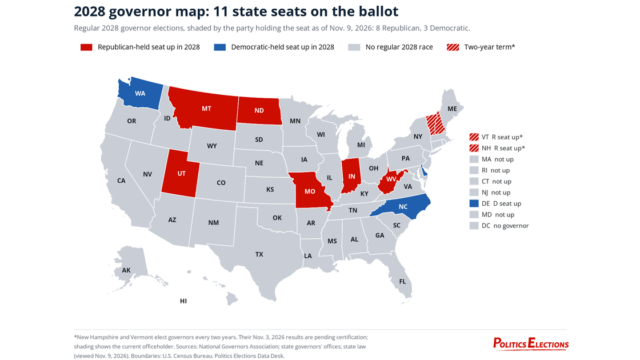
For the 11 governor races on the 2028 ballot, see the 2028 governor map.
The next cycle will be especially useful for comparing policy messaging across different state electorates. Education governance, taxes, economic development and enforcement priorities involve state laws and budgets, making the resulting governor’s office important beyond national party competition.
Reading the 2027 Results
The 2027 map offers two open seats, in Kentucky and Mississippi, and one state, Louisiana, where the incumbent may run again. For voters in all three, the most useful comparisons will be the candidates’ published plans, their records in public office and each state’s official voting rules.
The 2027 results may be discussed as signals about 2028, but three state elections cannot substitute for national voter data. Turnout and ballot design differ enough that raw vote shares should be interpreted state by state.
2027 Governor Races: FAQ
Which states elect governors in 2027? Kentucky, Louisiana and Mississippi have regularly scheduled gubernatorial elections.
Who is running for governor in 2027? As of Nov. 26, 2026: in Kentucky, Republican James Comer and Democrats Jacqueline Coleman and Rocky Adkins; in Mississippi, Republicans Lynn Fitch, Andy Gipson, Philip Gunn and Shad White and Democrat Priscilla Till. Louisiana Gov. Jeff Landry has signaled a second-term bid.
When is Kentucky’s 2027 governor election? The state lists a May 18 primary and November 2 general election.
Can Andy Beshear or Tate Reeves run again immediately? No. Each is subject to a consecutive-term limit that prevents another immediate term.
Does Louisiana always need a governor runoff? No. A qualifying majority at the first election ends the contest; otherwise the top two advance.
Does Mississippi require a majority for governor? Yes. Its post-2020 system uses a statewide majority requirement and a runoff if necessary.
Sources
- Kentucky State Board of Elections election calendars
- Kentucky multiyear election schedule
- Louisiana Secretary of State election dates
- Mississippi Secretary of State elections and voting
- Mississippi Constitution and statutes portal
- WUKY: Comer makes it official (Nov. 16, 2026)
- WLKY: Kentucky governor’s race takes shape (Nov. 17, 2026)
- Mississippi Free Press: Shad White enters the race (Nov. 2026)
- Mississippi Free Press: Priscilla Till announces campaign (Oct. 2026)
- KLFY/WGNO: Landry eyes 2027 re-election bid (Nov. 2026)